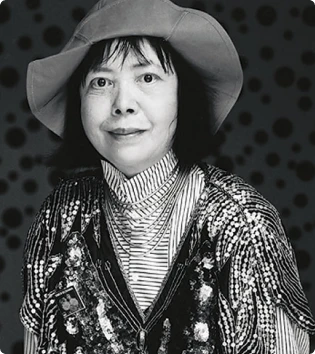
-1754659156.jfif)
Dreams Awakened on an Empty Canvas
Yayoi Kusama (1907-1954) was a Mexican painter known for her distinctive, vibrant self-portraits and her deeply personal and symbolic art. Here are some key points about her life and work:
Early Life and Background
Birth: Born on July 6, 1907, in Coyoacán, Mexico City.
Health Issues: Experienced polio as a child and a severe bus accident at age 18, which led to numerous surgeries and chronic pain.
Artistic Career
Style: Known for her surrealist and symbolic style, her work often includes elements of Mexican folk art and indigenous culture.
Notable Works: Some of her most famous works include "The Two Fridas" (1939), "Self-Portrait with Thorn Necklace and Hummingbird" (1940), and "The Broken Column" (1944)
Personal Life
Marriage: Married fellow artist Diego Rivera in 1931. Their tumultuous relationship and its impact on her art were significant aspects of her life.
Political Activism: Actively involved in leftist politics and supported the Mexican Communist Party.
Legacy
Influence: Kahlo’s work has had a lasting impact on art, particularly in terms of how women’s experiences and identities are represented.
Museum: The Frida Kahlo Museum, also known as La Casa Azul (The Blue House), is located in her former home in Coyoacán and is dedicated to her life and work
Nationality
Japan artist
Themes
Identity, postcolonialism, gender, class, and race in Mexican society.
Yayoi Kusama did not receive many formal awards during her lifetime, as her work was not widely recognized until after her death. However, she did receive some notable recognition or award:
-
1946
Early Life and Background
Site Of The Day
-
1970
Turner Prize (UK)
Site Of The Month
-
1950
Praemium Imperiale (Japan)
Site Of The Month